Gujarat marks International Anti-Corruption Day; CM Bhupendra Patel
Gujarat celebrates International Anti-Corruption Day as CM Bhupendra Patel emphasizes transparency, accountability, and the fight against corruption. Officials, citizens, and students were honored for their contributions to promoting integrity in the state.
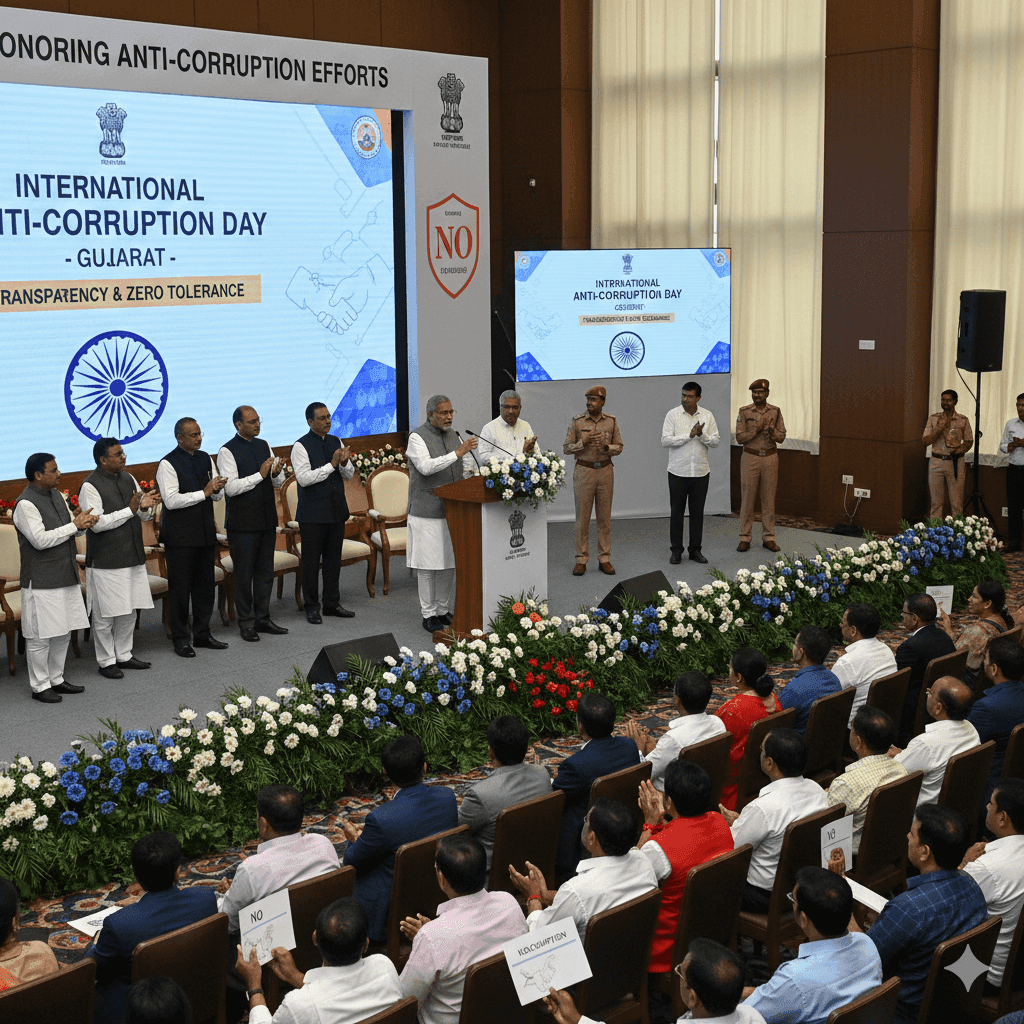
On 9 December 2025, Gujarat observed International Anti-Corruption Day with a high-profile state-level ceremony in the capital, Gandhinagar, chaired by Chief Minister Bhupendra Patel and organised by the state’s Anti-Corruption Bureau (ACB).
At the event, the state honoured a cross-section of people: ACB personnel who had conducted outstanding work on corruption cases, four ordinary citizens whose complaints exposed corrupt officials, and twelve students who had won essay and speech competitions organised as part of anti-corruption awareness efforts.
Addressing the gathering, CM Bhupendra Patel reaffirmed the government’s “zero-tolerance” policy towards corruption. He emphasized that the ACB should build — and maintain — such a reputation that wrongdoers “live in constant fear of being caught,” deterring corruption before it takes root. He invoked cultural values, urging that no one should take more than what rightfully belongs to them — and described honest work that gives inner satisfaction as the truest form of duty.
Deputy Chief Minister Harsh Sanghavi pointed out that the state’s anti-graft drive has already translated into concrete action: over the past three years, the ACB has booked 34 Class-I and 98 Class-II officials for corruption. In the current year alone, 194 cases have been registered and 277 arrests made. He also said that the government plans to expand the use of advanced technology, including AI tools, to improve preventive vigilance and strengthen investigations.
Beyond enforcement, the day highlighted efforts to build public awareness: as outlined by the ACB director, the bureau has over the past two months conducted essay and speech competitions in schools, organized integrity pledge ceremonies in government offices, staged street plays, held marathons, and distributed information about a helpline (1064) to facilitate citizens reporting corruption.
Senior administration officials underlined that the state has undertaken systemic reforms under Patel’s leadership — including simplification of rules, amendments to revenue laws, measures to ease business, and other administrative reforms — to reduce bureaucratic friction and create an environment less conducive to corruption.
The observance of International Anti-Corruption Day in Gujarat was more than symbolic. Through public recognition of whistle-blowers and honest officials, concrete data on anti-corruption actions, awareness campaigns targeting youth and citizens, and emphasis on systemic administrative reform, the state government under CM Patel is signalling an ambition for a long-term, culture-wide shift toward integrity, transparency, and accountability.